A 12th-Century Treasure of Angkor Architecture
If you visit Cambodia, don’t miss touring Chau Say Thevoda Temple, which is another significant beauty and culture. Chau Say Thevoda is a hidden gem in Angkor Archaeological Park, in Siem Reap. This temple is a captivating Hindu temple, where it is known as the best temple in Angkor for meditation in Cambodia. It was constructed in the mid-12th century during King Suryavarman II’s reign, it exemplifies the grandeur of the Angkor Wat architectural style.
Why is Cambodia, especially Siem Reap the most popular destination for temple touring?
Cambodia is an ancient country rich in natural beauty, cultural heritage, and spiritual significance, especially evident in the temples of Siem Reap.
Siem Reap, a historically significant region, is deeply rooted in Khmer culture, religion, and tradition. Among its many sacred sites, the spiritual meaning of Chau Say Thevoda temple stands out as one of the oldest and most spiritual temples. It holds deep cultural, historical, and religious importance within the local Buddhist tradition, making it a revered site for both worship and cultural reflection.
Where is Chau Say Thevoda Located?
Chau Say Thevoda is located in a hidden gems Angkor Archaeological Park 2026 near Angkor Thom Victory Gate. It is 5.7km, and it takes around 12 mins from Prasat Angkor Wat.
To get to Prasat Chau Say Thevoda, you have to go to the northeast of the ancient capital Angkor Thom’s east gate, directly south of Thommanon across the Victory Way.
Here is the map: Guide to Prasat Chau Say Thevoda
If you are travelling there by Tuk-Tuk, or bike, it would be much more convenient due to offering greater maneuverability in the often congested roads of Siem Reap and can potentially reach areas that are less accessible to larger vehicles. Additionally, by choosing these ways, you actually receive the open-air nature of a tuk-tuk, which can be refreshing and offer a more immersive experience of the city.
History of Chau Say Thevoda
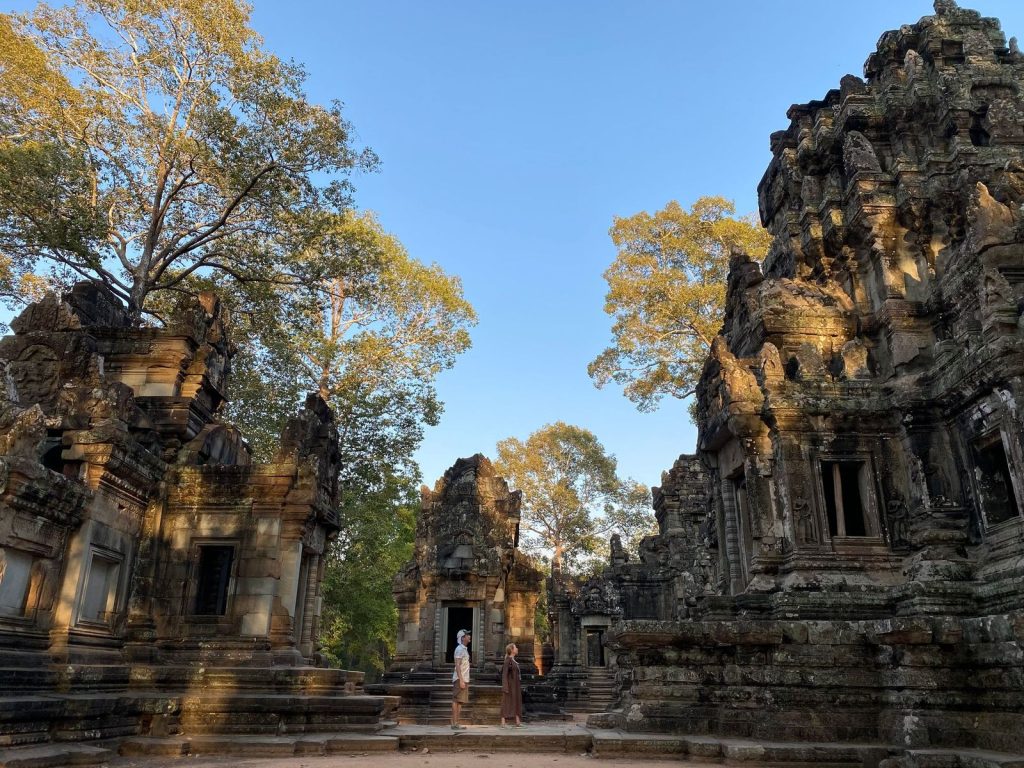
Prasat Chau Say Thevoda was built during King Suryavarman II’s reign in the 12th century. It is originally a Hindu temple, dedicated primarily to Vishnu and Shiva, which is evident in its carvings of Hindu deities and mythological scenes from epics like the Ramayana and Mahabharata. Its architectural style, part of the Angkor Wat period, emphasizes intricate stone reliefs and sacred symbolism rooted in Indian religious traditions. Later infused with Buddhist elements. Between 2000-2009, the temple was restored after deterioration. dedicated primarily to Vishnu and Shiva, which is evident in its carvings of Hindu deities and mythological scenes from epics like the Ramayana and Mahabharata. Its architectural style, part of the Angkor Wat period, emphasizes intricate stone reliefs and sacred symbolism rooted in Indian religious traditions.
Back in the past, there was much dynamic religious history regarding Chau Say Thevoda Temple, which the building construction is similar to the Hindu temples. It was recognized that the temple resembles the temple in India, particularly in Odisha.
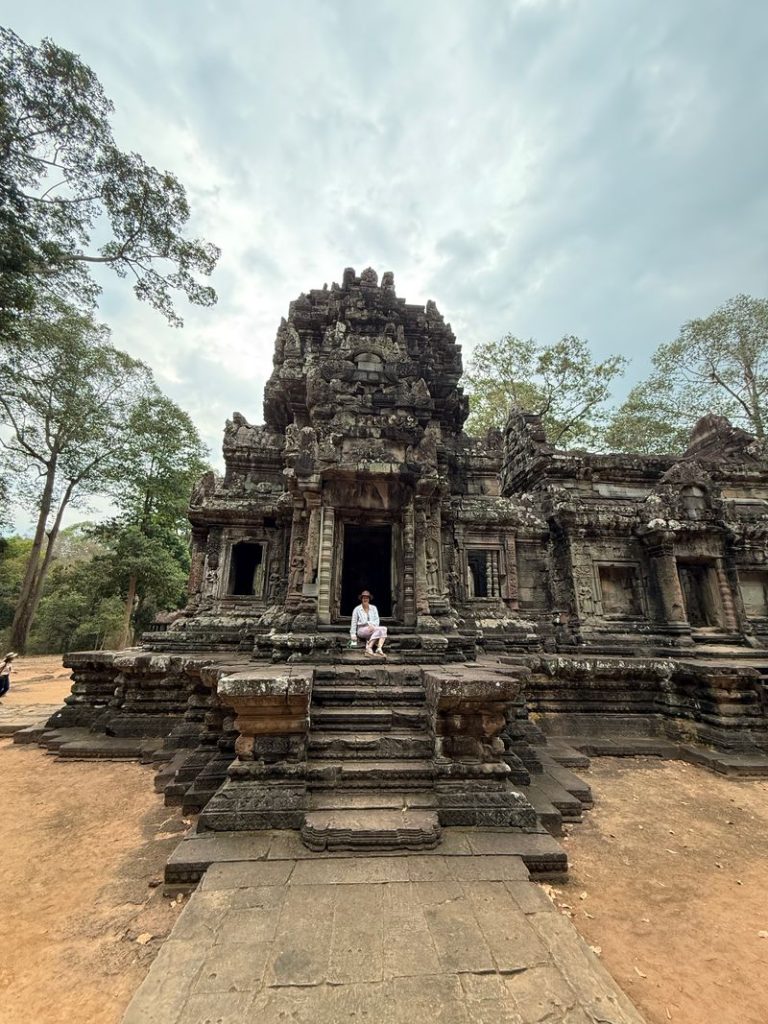
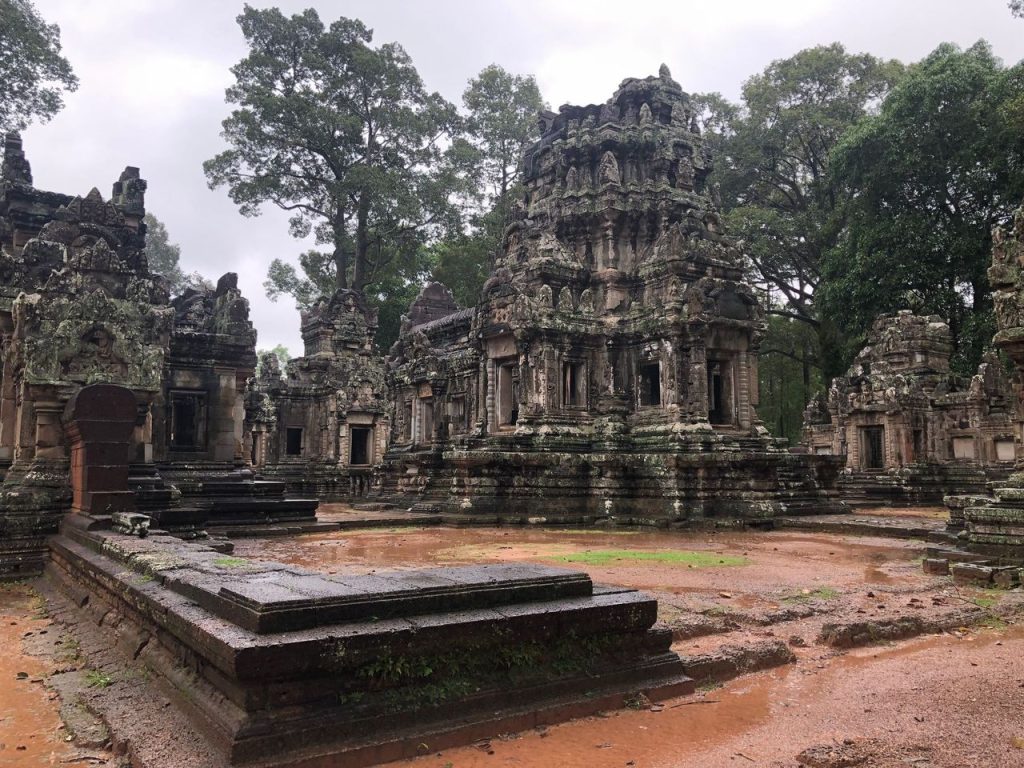
Chau Say Thevoda temple has four gopuras or towers on the four cardinal signs with an entrance from the east through a raised bridge. The long hall, which links the gopuras and central chamber of the temple, has very elegant flower decorations.
Architecture and Design
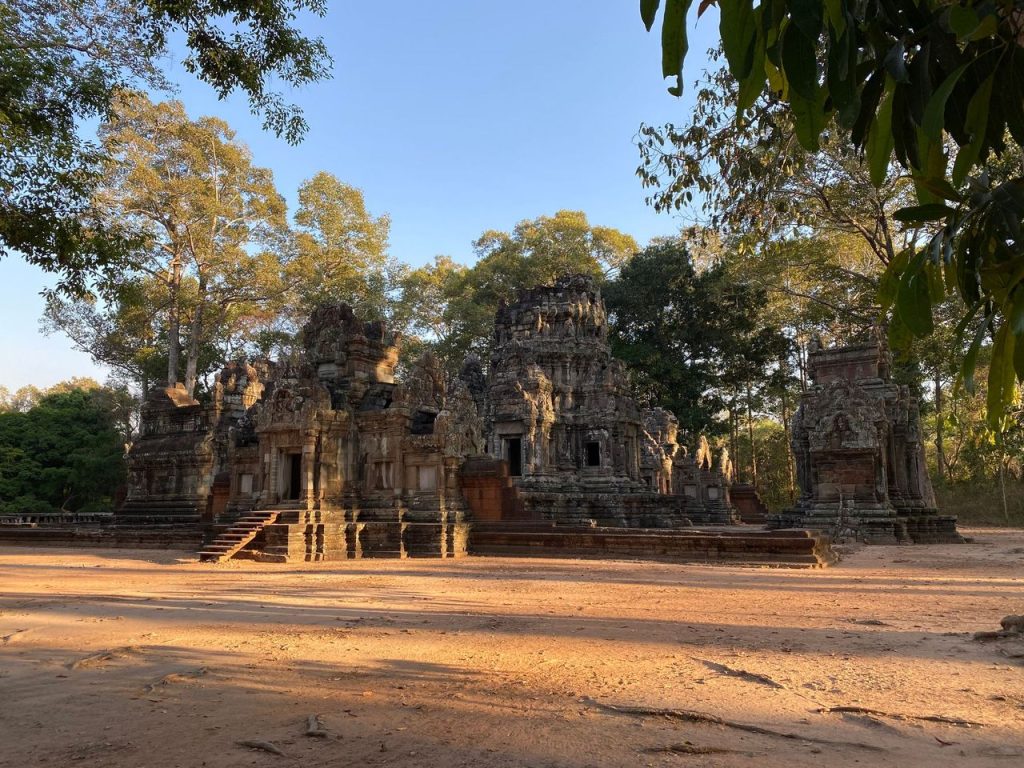
The temple structure itself mainly focuses on the central sanctuary, libraries and gopuras. It intricates carvings featuring Hindu deities, Devatas, and Buddhist motifs.
Within the Angkor Archaeological Park, Chau Say Thevoda temple offers more than just intricate carvings and ancient stonework. It tells a quiet story of Cambodia’s religious evolution. Originally built in the 12th century as a Hindu sanctuary dedicated to Shiva, the temple later embraced Buddhist influences as Theravada Buddhism spread across the region.
Walking along the serene sandstone causeways and through the tranquil courtyard, visitors can observe this layered history: Hindu bas-reliefs blending subtly with later Buddhist imagery.
The peaceful atmosphere, enhanced by the surrounding forest and the soft echo of footsteps on worn stone, invites contemplation. Chau Say Thevoda stands as a graceful reminder of how faith, culture, and time are delicately interwoven in the heart of Siem Reap.
Spiritual and Cultural Significance
The word “ Thevoda” is fully hidden meaning the meaning of the temple’s name and connection to Thevoda (Devas/Divine beings). Chau Say Tevoda translates into English as the “prolific grandchildren of a deity”. It’s located just outside Angkor Thom near the Victory Gate. The temple was built as a Hindu temple and dedicated to Shiva and Vishnu.
Based on Khmer beliefs, this temple represents a place of reverence and spiritual connection, serving not just as an ancient temple but as a sacred space of reverence and connection to the divine. In addition, the temple reflects the Khmer people’s early devotion to Hindu cosmology and later, their embrace of Theravada Buddhism, standing as a living cultural monument because it continues to embody the spiritual, artistic, and historical identity of the Khmer people. In addition to this Hindu representation, this ancient place is also known as a boutique Pilates training, which is near Angkor Wat as details below :
Pilates and Mindfulness: A Unique Experience at Chau Say Thevoda
This temple fits perfectly with Pilates and mindfulness for these compelling reasons:
1. Spiritual Atmosphere
- Chau Say Tevoda is an ancient Hindu temple built during the Angkor period, steeped in centuries of spiritual significance. The serene energy of the site naturally promotes inner peace and reflection for mindfulness and meditative practices.
2. Architectural Harmony
- The temple design and intricate carvings reflect balance and focus, values that align well with Pilates and mindfulness. Being surrounded by such harmonious architecture can enhance mental clarity and a sense of grounding.
3. Natural Surroundings
Nestled among trees and near the Siem Reap River, Chau Say Thevoda offers a calm, shaded environment that’s ideal for outdoor movement and breathwork. The connection to nature aids is perfect in reducing stress and enhancing mindfulness.
4. Quiet and Less Crowded east of Angkor Thom’s Victory Gate and directly
Chau Say Thevoda is on the east side of Angkor Thom’s victory gate, and directly opposite Thommanon Temple. Compared to more popular temples like Angkor Wat or Ta Prohm, Chau Say Tevada is typically less crowded. This relative solitude creates an intimate and distraction-free space, perfect for focused physical movement. It actually provides tons of benefits of somatic movement in these ancient locations.
5. Cultural and Historical Depth
- Practicing mindfulness in a place with deep cultural roots can amplify your sense of presence and appreciation at the same time, and with modern wellness practices like Pilates can be even profoundly meaningful.
About the Pilates Training Program
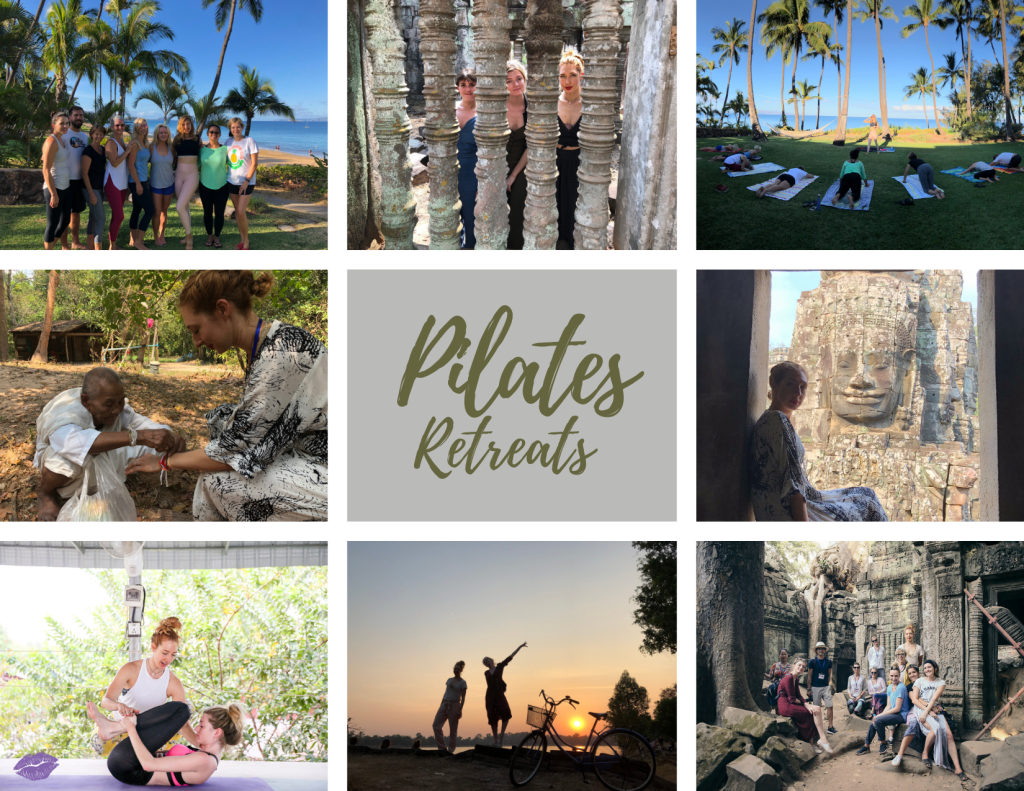
During the retreat, you may opt into group mat classes that are held. Pilates is truly tailored for travelers seeking stress relief, mindfulness, and gentle fitness. The training is mainly led by experienced instructors, who are familiar with mindful movement.
Book outdoor Pilates session at Chau Say Tevoda.
Practical Details
We recommend our guests to check our official website for further inquiries as well as to book in advance on how to join our Pilates training. It is a luxurious wellness retreat in Siem Reap 2026.
A few suggestions for our guests to feel more comfortable when training is to wear modest clothing.
Tops: Opt for high-neck, longer-cut tops, or long-sleeve shirts made of lightweight.
Bottoms: full-length, high-waisted leggings are a staple. Sports Bra is also fit or other fabric and fit Considerations.
Transformative Experience
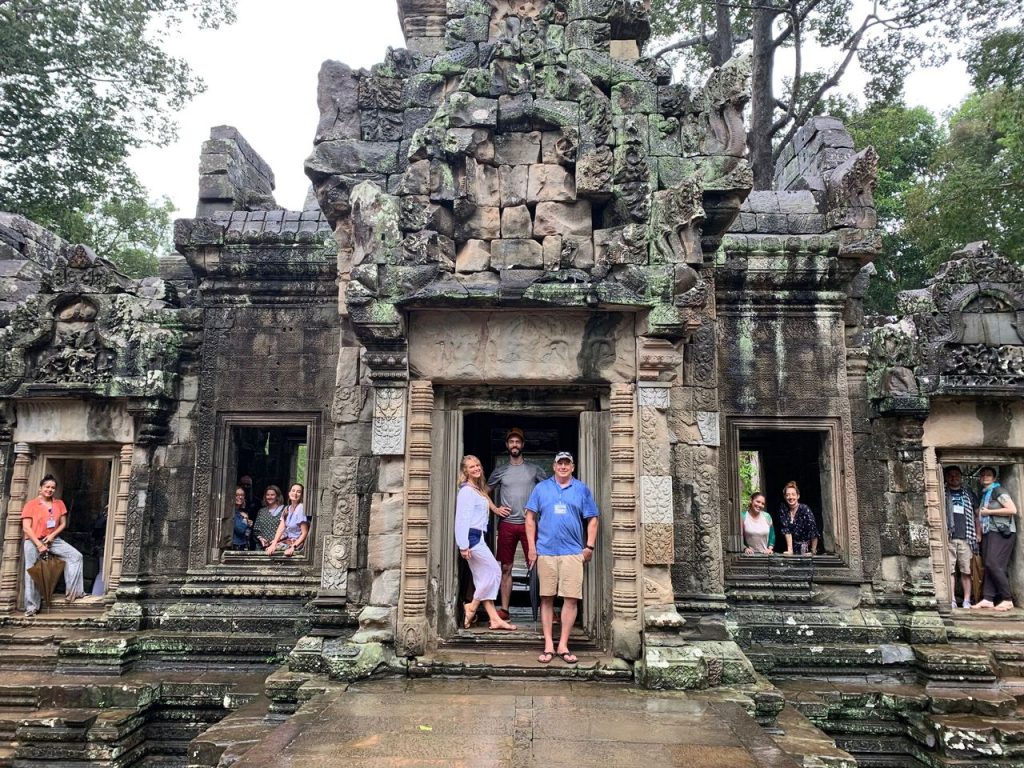
Combining cultural immersion with holistic wellness is beneficial because these both are the outer world and the inner self at the same time. Culture reshapes perspective, and wellness reshapes awareness. We can see, experience or even learn to adapt with daily habits, values, time, communication, and community. Throughout holistic wellness, such as yoga, meditation, breathwork, mindful movement increases self-awareness and movement in Siem Reap. They help to slow down the body, allowing the mind to open wellness practices, regulating the nervous system, as well as reducing stress and mental noise. It is a holistic wellness experiences for solo travelers Cambodia.
Visitor Tips for Exploring Chau Say Thevoda
To receive the best experience of visiting this temple, we recommend a few tips:
- Visiting the temple early morning or late afternoon would be the best times
- To visit Chau Say Tevoda, you must purchase an Angkor Pass, which grants access to many temples in the Angkor Archaeological Park.
- Purchase the ticket at the Official Angkor Ticket Office, it opens daily.
- Varies price options available as a recent update
1-day: $37
3-day: $62
7-day: $72
Again, these ticket alternatives can be purchased at the Angkor Pass Ticket Counters, which are open from 5:00 AM to 5:30 PM.
In addition, Chau Say Thevoda is included in all Angkor Pass options, which are open to be visited from 7:30 AM to 5:30 PM, this is a perfect time giving you ample time to plan a mindful visit or a Pilates session in the early morning light.
Regardless of visiting the temple, you are required to follow Do & Don’t.
Following this, it means respecting the sacredness of Chau Say Thevoda, and it is essential to do so, even when taking photos or practicing movement:
Do:
- Dress modestly: cover shoulders and knees. No revealing clothes are allowed
- Keep voices low: it’s a spiritual site, not just a photo opportunity.
- Step lightly and avoid climbing on fragile stonework.
- Ask before photographing monks or locals. This shows a high respect and manner.
Don’t:
- Use drones without permission. Drone is not allowed without permission at Angkor Archaeology Park unless you request permission.
- Pose inappropriately on temple structures.
- Play music or do loud group exercises.
Around Chau Say Thevoda, there are other nearby attractions such as Thommanon, Angkor Thom to combine with visit. Therefore, it enhances your visit with a Pilates session for deepening the mind-body connection.
Legends and Mystique
This temple wall is adorned with intricate carvings, believed to be hidden mysterious and deep cultures, which obtains stories depicted in the temple and local legends or beliefs surrounding the site. In addition, there is a symbolism in temple design, representing devatas, lotus motifs, often blending regional folklore with Hindu-Buddhist cosmology:
- Devas and Asuras locked in an eternal dance of balance.
- Naga serpents encircling the base of the temple, symbolizing protection and the bridge between the underworld and heavens.
- Celestial Apsaras (Thevodas) in flowing motion, frozen in stone, dancing to the rhythms of the universe.
- Tales of a mortal prince chosen by the gods, who climbed the sacred stairs to enlightenment, are depicted on central lintels.
Symbolism in Architecture and Design
The architecture of Chau Say Thevoda reflects a rich symbolic language:
- Lotus Motifs: The lotus is etched across doorways and columns, symbolizing purity rising from the earthly realm to spiritual awakening.
- Mount Meru Structure: The central spire of the temple mirrors Mount Meru, the cosmic mountain in Hindu and Buddhist belief, representing the axis of all existence.
- Devata Statues: Female divine spirits (Devatas) line the corridors, believed to guard the sacred wisdom within. Each devata is unique—some hold lotus buds, others conch shells or prayer beads, possibly marking different spiritual roles or elemental guardianship.
- Four Cardinal Entrances: Symbolizing the universal reach of the temple’s blessings, the doorways align with the cardinal directions and are guarded by symbolic creatures (lions, elephants, Garuda, and Makara).
Mystical Beliefs and Legends
Local villagers whisper stories passed down through generations:
- The temple is only visible to those with a pure heart, appearing through mist at dawn.
- A hidden chamber beneath the temple holds a relic said to be a fragment of Indra’s thunderbolt, guarded by an eternal flame that never extinguishes.
- Once every hundred years, a celestial alignment lights the inner sanctum, revealing prophecies carved into obsidian slabs.
- The temple’s soundscape: if listened to in silence, mirrors ancient chants, believed to resonate with one’s soul and awaken past-life memories.
Conclusion
Hidden in the heart of lush, want to discover both nature and history, Chau Say Thevoda stands as a timeless sanctuary, a mystical temple steeped in spiritual symbolism, ancient legends, and deep cultural roots.
Beyond its visual majesty, this temple serves as a spiritual retreat, offering visitors a space to reconnect with inner peace.
To deepen the holistic experience, guests can now join on-site Pilates sessions set against the backdrop of this sacred site.
Surrounded by nature and ancient wisdom, these guided sessions offer a unique opportunity to:
- Restore the body through mindful movement.
- Calm the mind amidst the temple’s serene energy.
- Integrate spiritual stillness with physical wellness.
Whether you’re a seasoned practitioner or new to Pilates, the experience of aligning body, breath, and spirit at Chau Say Thevoda is one you’ll carry long after your visit.
Plan Your Journey
If you seek quiet introspection, spiritual reconnection, or simply a moment of peace away from the modern world, Chau Say Thevoda welcomes you with open arms and ancient grace.
We’d love to hear from you!
Have questions about the temple, its legends, or the Pilates sessions?
Drop a comment below, reach out to us, or book your spot for a transformative visit today.


0 Comments