
The Iconic UNESCO World Heritage Masterpiece of Khmer Architecture in Cambodia
Angkor Wat Cambodia is known as the most spectacular heritage, rich in culture, extraordinary beauty, and iconic temple in Southeast Asia, located in Siem Reap, Cambodia. More amazingly, this magnificent temple is considered as the most amazing Khmer architecture, which was inscribed as a UNESCO World Heritage List in 1992 for its recognition and identification.
Historical Background
Angkor Wat temple was built in the early 12th century by King Suryanvarman II, dedicated to the Hindu God Vishnu at first. During the period of great construction that lasted more than 300 years, there were many changes in architecture. By the end of the 12th century, it was transformed into a Buddhist temple, and until nowadays it is respectively represented as a symbol of Cambodia. The role as the capital of the Khmer Empire was gradually known as Cambodia, officially Kingdom of Cambodia , Country, Southeast Asia. Area: 69,898 sq mi (181,035 sq km). Population: (2025 est.) 17,578,000. Capital: Phnom Penh. The vast majority of the population belongs to the Khmer ethnic group. Language: Khmer (official). Religions: Buddhism (official); also traditional beliefs. Currency: riel. The landscape is dominated by large central plains; the Dangrek Mountains rise along the northern border. Cambodia lies largely in the basin of the Mekong River; the large lake Tonle Sap is in its western parts. Cambodia is a tropical country, where most places are covered by tropical forest. It is one of the world’s poorest countries. Agriculture employs about three-fourths of the workforce.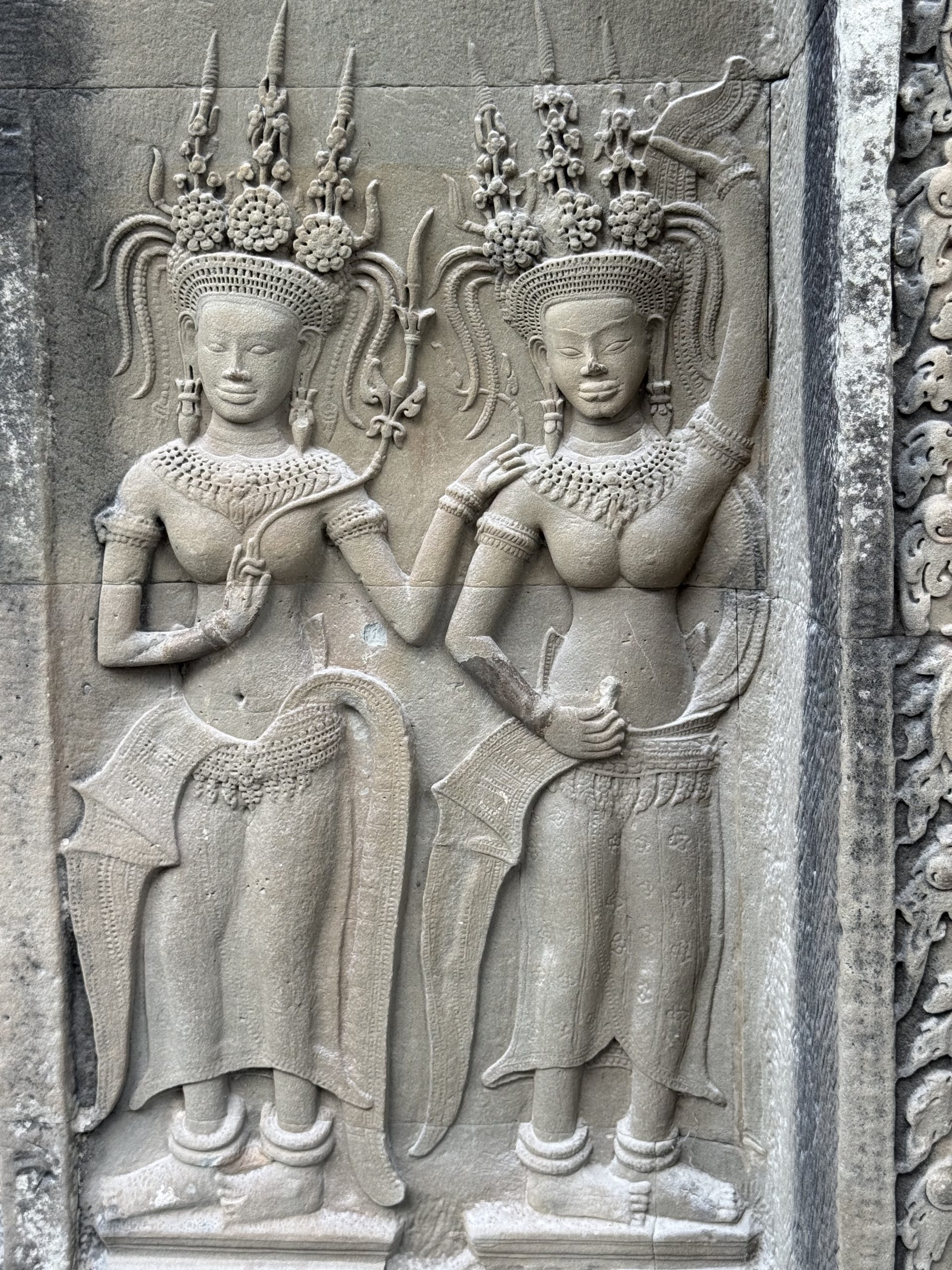
Apsara carved into the walls of Angkor Wat
Architectural Marvel
The architectural building instead expanded the most magnificent design, representing Mount Meru, the home of the gods in Hindu mythology.
Angkor Wat temple in Cambodia was designed with the five central towers and extensive bas-reliefs depicting Hindu epics. All of the original religious motifs derived from Hinduism, and the temple was dedicated to the god Vishnu. The five main towers of Angkor Wat represent the peaks of Mount Meru, the mythical home of the gods in Hindu belief. In this mythology, Mount Meru is encircled by a vast ocean, which is symbolized by the massive moat surrounding the temple complex, suggesting the oceans that lie at the world’s edge.
The temple’s symmetry and intricate carvings are not extremely special because they do not simply show how they are decorated, but also reflect the temple’s purpose and the beliefs of its builders. In architecture, symmetry brings a feeling of balance and unity, while detailed carvings tell stories and hold symbolic significance, deepening the spiritual atmosphere.
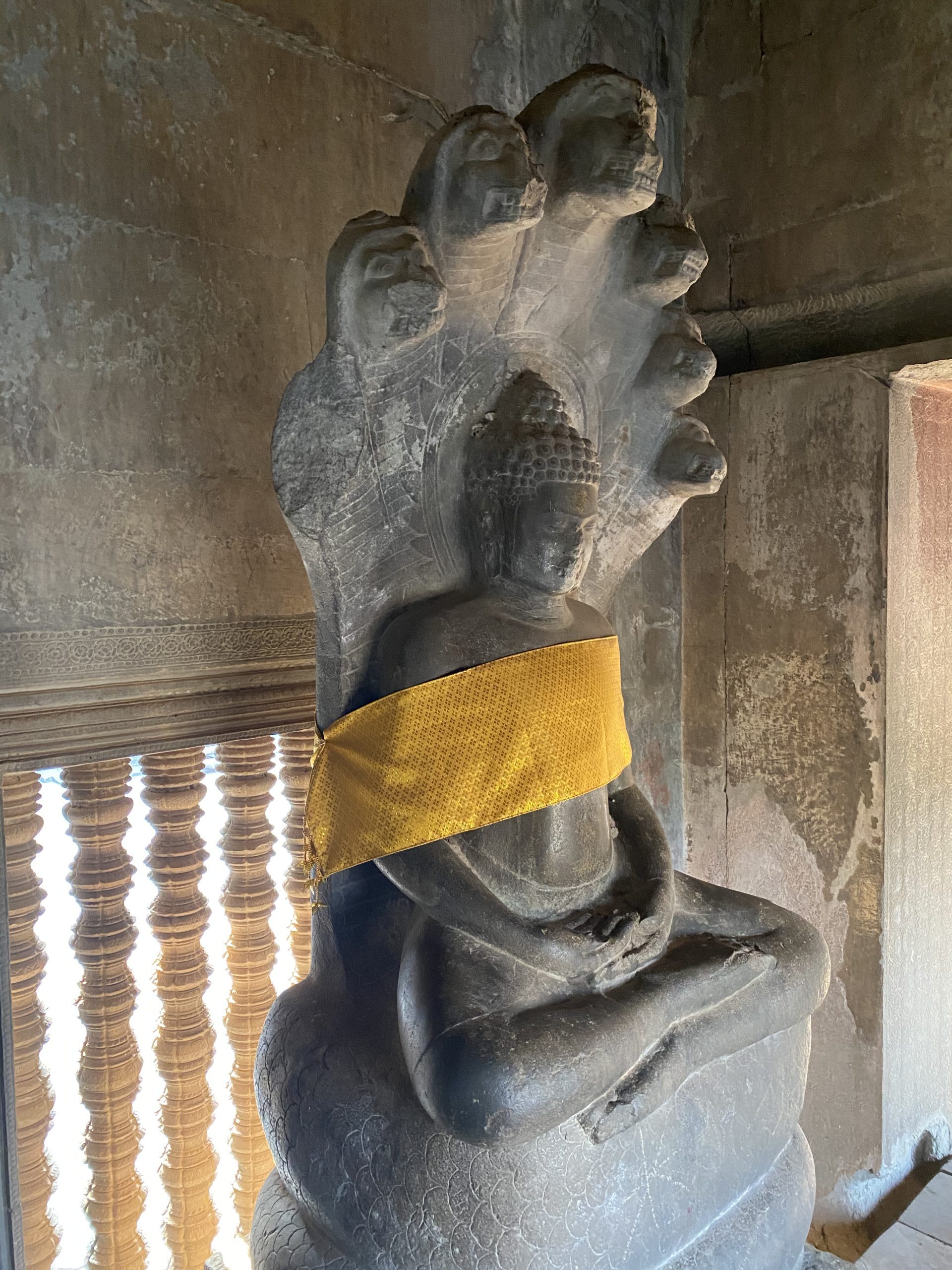
The Buddha sits in quiet meditation, as Angkor breathes history around him
Cultural and Spiritual Significance
Angkor Wat Cambodia represented on the Cambodian flag, and full of histories and cultures. Its importance in both Hinduism and Buddhism has served Cambodia become one of the richest cultural and spiritual significance. Both religions have shaped Cambodian culture and offer unique advantages. During the Angkor period, Hinduism played a key role in shaping royal power and temple design. In contrast, Theravada Buddhism has fostered peace and a strong sense of community, offering purpose and guidance in the daily lives of Cambodians. Beside history and culture, the temple was also a pilgrimage site and its role in Cambodian identity. Temples in Cambodia, particularly during the Angkor period, served not only as religious centers but also as important pilgrimage destinations. Pilgrims from across the region traveled to these sacred sites, most notably Angkor Wat, not only to worship but to seek spiritual merit, healing, and blessings.
Additionally, pilgrimage to temples played a cultural and social role, fostering a shared sense of spiritual heritage and reinforcing the teachings of Hinduism and later Theravada Buddhism. The temples, with their grand scale and sacred symbolism, were seen as earthly representations of the cosmos, especially Mount Meru, and served as powerful reminders of the sacred geography in Cambodian belief.
South Pagoda at Bayon Temple in Angkor Thom
Best Time to Visit
Dry season, between November to February, is best recommended for travellers. With milder temperatures and lower humidity, visitors can explore the vast Angkor temple complex in comfort. This season offers ideal conditions for sightseeing, photography, and leisurely walks through ancient ruins without the discomfort of intense heat. The cooler weather also brings a more peaceful and refreshing atmosphere, allowing travelers to fully immerse themselves in the spiritual and historical beauty of the area. It is beneficial for beautiful moment:
- Perfect photography: for capturing sunrise at Angkor Wat or the moss-covered ruins for Ta Prohm
- Comfortable Touring: Less heat means longer, more enjoyable exploration without the need for constant breaks or hydration stops.
- Crowd Consideration: While this is peak tourist season, early mornings and lesser-known temples still offer serene experiences.
Ticket Information
There are various prices of tickets depending on tourist selections. When planning your visit to the Angkor Archaeological Park, it’s important to know that ticket prices vary based on how many days you wish to explore. The pass options are designed to suit different travel styles and schedules, making it easier and even more convenient for visitors to choose what works best for them.
One-Day Pass – $37: Ideal for travelers with limited time, this pass allows you to see the highlights of the Angkor complex in a single day. Perfect for those doing a quick cultural stop.
Three-Day Pass – $62: This is a great option for those who want to take their time exploring the major temples like Angkor Wat, Bayon, and Ta Prohm, which are the most famous and significant temples, as well as some lesser-known sites. The pass is valid for any three days within a 10-day period, offering flexibility.
Seven-Day Pass – $72: Best for history enthusiasts or photographers who want to dive deep into the Angkor site. This pass allows access on any seven days within a month, giving you plenty of time to explore at a relaxed pace.
For more details: kindly check Angkor Enterprise for extra information and other alternatives.
Tips for Visitors: joining a tour with Crow’s Nest Retreat, we always inform and ensure our guests about crucial tips regarding the tickets and other necessary information while visiting:
- Tickets are purchased at the official Angkor Ticket Center near Siem Reap, and your photo will be taken on-site for the pass.
- Keep your pass with you at all times, park officials check it regularly at temple entrances.
- Start early to make the most beautiful of your day and avoid the midday heat.
- Wear unrevealing clothes, such as long pants, long dresses or long skirts with unrevealing shirts
- Stay hydrated and wear comfortable footwear.
Exploring Beyond Angkor Wat
Beyond Angkor Wat, there are lots more magnificent temples near the Angkor complex:
- Angkor Thom: Angkor Thom is also known as Bayon Temple with its massive stone faces. The temple is another alternative you must visit when you come to Cambodia. The entire temple manifests in the large scale of the construction, and in the widespread use of laterite building. More interestingly, the temple is in the face-towers at each of the entrances to the city and in the naga-carrying giant figures which accompany each of the towers, surrounded by beautiful nature, bird crapping. The temple itself is also surrounded by regional pagodas, where national and international tourists can explore belief, cultures as a Buddhist region.
Bayon Temple in Angkor Thom
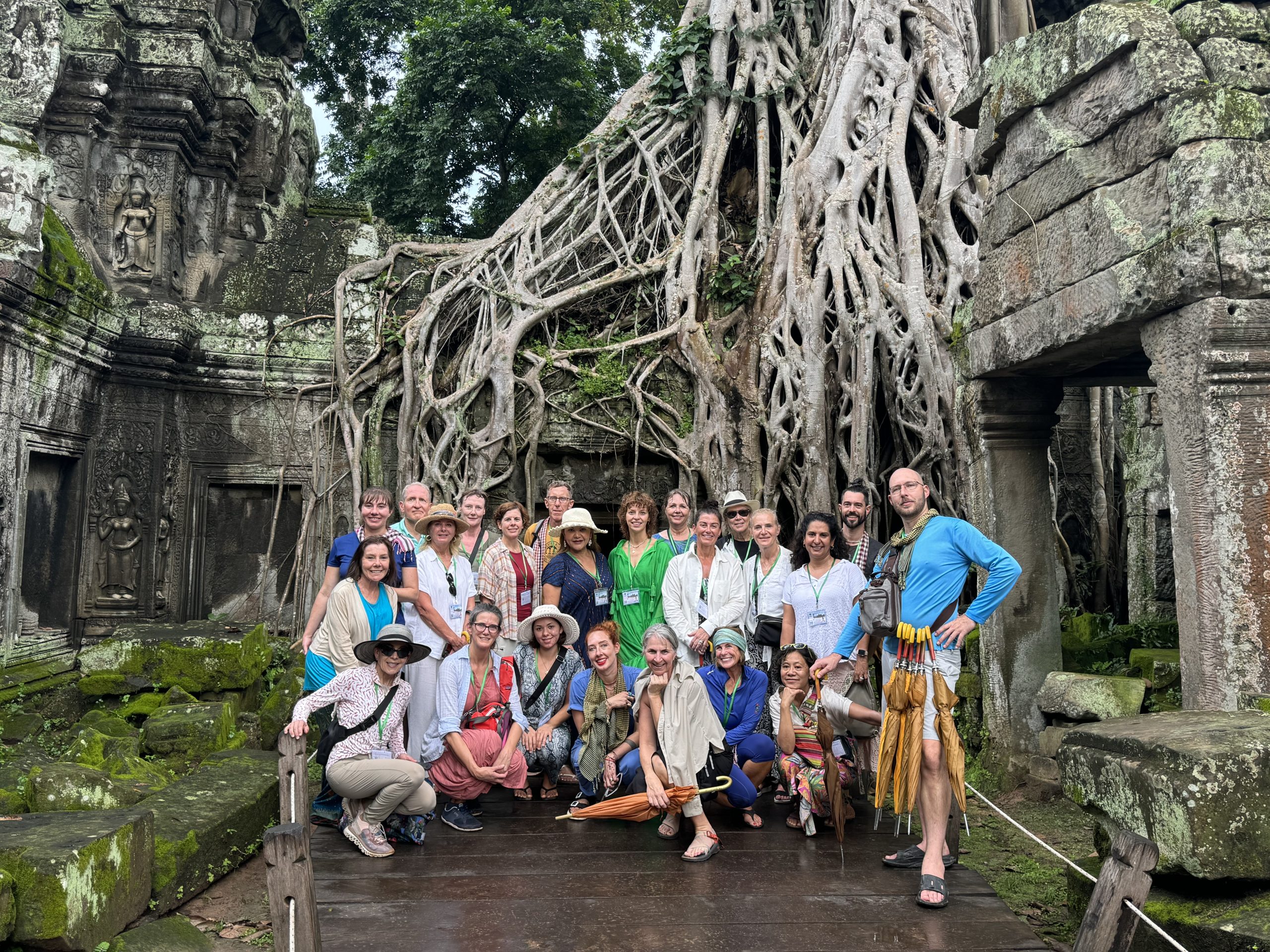
Ta Prohm: Famous for its overgrown trees and appearance in the “Tomb Raider” movie or the “Angelina Jolie Temple” because of its depiction in the film Lara Croft, in 2001. It was built in the Bayon style largely in the late 12th century and early 13th century and was originally called Rajavihara. In addition,the trees growing out of the ruins and the jungle surroundings have made the temple one of the most popular temples with visitors to the area until it has been on the UNESCO World Heritage List since 1992.
Your content goes here.
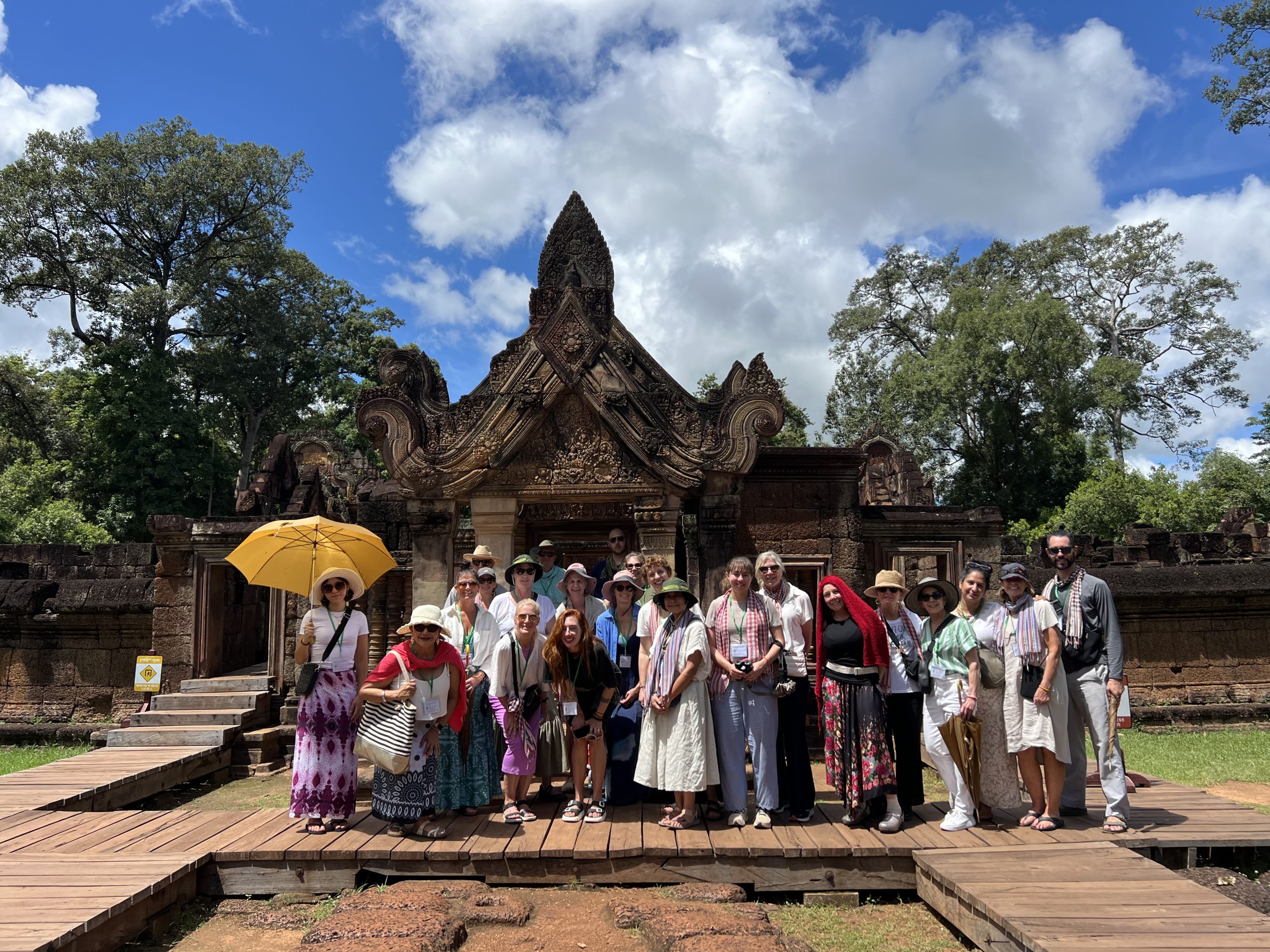
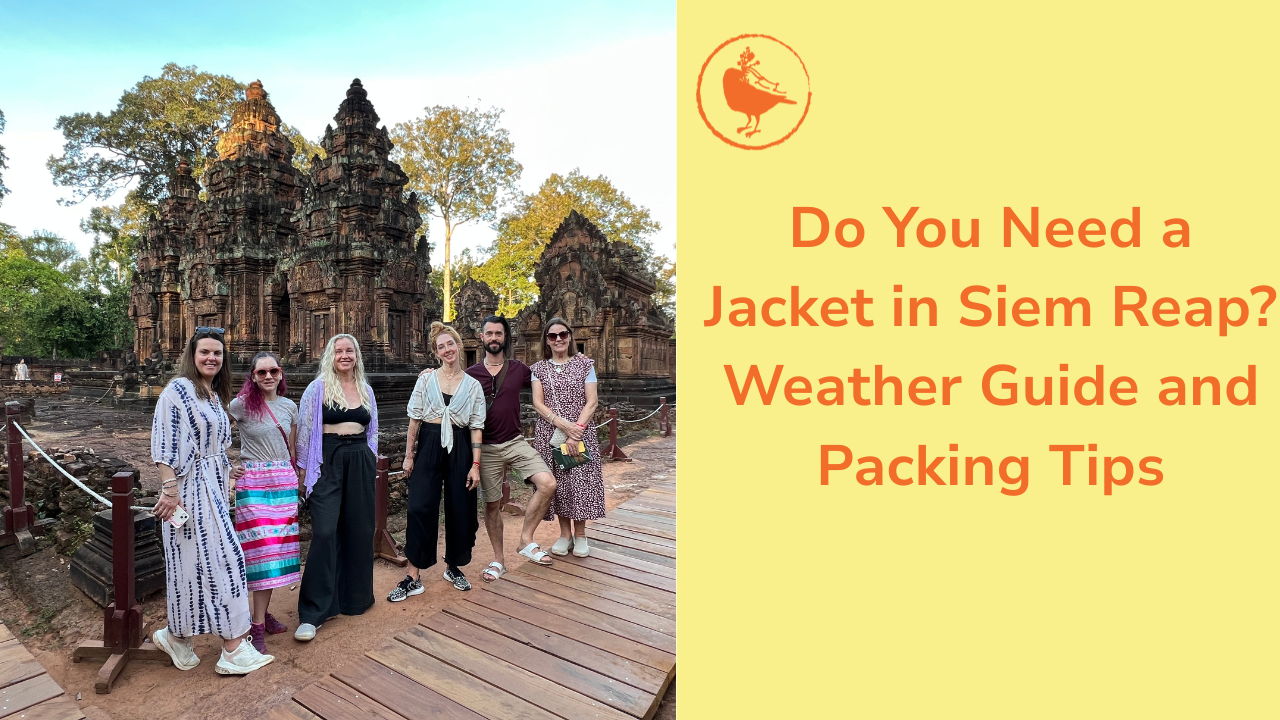
Banteay Srei: Renowned for its intricate pink sandstone carvings. Bantesy Srei is a unique temple, where the color of the sandstone is significantly different from other temples. Banteay Srei is built largely of a hard red sandstone that can be possibly carved like wood, brick, and laterite.
Pink sandstone glowing under the Cambodian sun
Mysteries and Legends
Siem Reap, home to the world-renowned Angkor Archaeological Park, continues to captivate historians, travelers, and scholars alike. While the majestic temples of Angkor Wat and Bayon have stood as iconic symbols of Cambodia’s cultural heritage, the story of Angkor is far from complete.
All magnificent temples in Cambodia, especially Siem Reap, were built and achieved within full attention, meticulous planning, skilled craftsmanship, and an understanding of both natural and mathematical principles.
Among these, Angkor Wat is a unique combination of the temple mountain, which is the standard design for the Khmer empire’s state temples. Most of which were originally derived from religious beliefs of Hinduism. The construction of Angkor Wat suggests that there was a celestial significance with certain features of the temple. This is observed in the temple’s east–west orientation, and lines of sight from terraces within the temple that show specific towers to be at the precise location for viewing such stunning sunrises. The Angkor Wat temple’s main tower aligns with the morning sun of the spring equinox.
Today, many questions about the architecture of ancient Cambodia remain unanswered. From the engineering marvels of its temple complexes to the spiritual and symbolic meanings behind their intricate carvings, researchers are still piecing together the full picture of this remarkable civilization.
Ongoing archaeological excavations across the Angkor site suggest that much more lies hidden beneath the surface. Experts believe that undiscovered structures, artifacts, and even entire sections of the city are still buried, waiting to be revealed. Each new discovery not only adds depth to our understanding of the Khmer Empire but also reaffirms the enduring mystery and grandeur of Angkor.
As new technologies and methods open up fresh possibilities for exploration, Siem Reap remains a living testament to the complexity and sophistication of Cambodia’s past—a past that continues to unfold with each layer of earth removed.
In addition to this on-going process, there are still legends surrounding the temple’s construction and purpose. Beyond their breathtaking beauty and architectural brilliance, the temples of Angkor carry layers of meaning that go far beyond stone and sculpture. While ongoing excavations continue to reveal physical remnants of the past, a more elusive question still lingers: Why were these temples built in the first place?
Many scholars believe the temples served both religious and political purposes. As the heart of the Khmer Empire, Angkor’s rulers used monumental architecture to express divine kingship, a concept where the king was not only a political leader but also a god-like figure. Temples like Angkor Wat were constructed to honor Hindu deities, particularly Vishnu and Shiva, while also reinforcing the king’s divine right to rule. Local legends tell of divine intervention, hidden treasures, and celestial alignments. Some believe the temples were built according to astrological principles, aligning with celestial bodies to channel cosmic energy. Others whisper of sacred relics buried beneath the foundations, giving the structures mystical power.
In recent years, researchers have also explored the possibility that Angkor’s temples functioned as spiritual maps, symbolic representations of the Hindu cosmos. Mount Meru, the mythical center of the universe in Hindu and Buddhist cosmology, is echoed in the towering central spires of temples like Angkor Wat.
Ultimately, the purpose of these awe-inspiring monuments may be a fusion of devotion, politics, myth, and cosmic ambition. They weren’t just places of worship, they were messages in stone, meant to last for eternity.
Practical Information
- Getting There:
Situated just approximately 5 kilometers from the heart of Siem Reap, this location offers the perfect blend of peaceful seclusion and easy access to the city’s vibrant attractions. A short 10-15 minute drive places you right in the middle of Siem Reap’s bustling markets, charming cafés, and the iconic Pub Street nightlife. Whether you’re planning day trips to the Angkor Wat temple complex or want to enjoy the comforts of a quieter retreat after exploring the city, this location ensures you’re never far from the action, yet distant enough to unwind in tranquility.
Transportation options: exploring the area around Siem Reap is both convenient, and enjoyable, thanks to a wide range of transportation suited to every travel style, Tuk-Tuks, bicycles, guided tours, are the most popular and iconic way to get around, affordable, open-air, and always easy to find, they offer a relaxed and scenic ride through the city and out to the temples. For a more personal and eco-friendly experience.
Bicycles are widely available for rent and perfect for discovering the quieter backroads and rural landscapes at your own pace. If you prefer a structured itinerary, guided tours by van, electric bikes, or even quad bikes, offer a deeper dive into the history, culture, and hidden gems of the region, with knowledgeable local guides leading the way. Whether you’re an adventurer or a comfort-seeker, getting around Siem Reap is part of the fun.
- Accommodation:
Range from budget hostels to luxury hotels in Siem Reap. Most of them offer a diverse range of accommodations to suit every budget and travel style.
$10–15 per night: Budget travelers and backpackers will find no shortage of clean, comfortable hostels and guesthouses, many with dorm beds. These often include social spaces, free Wi-Fi, and even small pools or bars, perfect for meeting fellow travelers.
$25–50 USD per night: Mid-range options such as boutique hotels and locally-run B&Bs blend affordability with charm, offering private rooms, lush gardens, and personalized service.
Starting from around $100 USD: For those seeking indulgence, luxury hotels and resorts—some inspired by Khmer architecture, provide world-class amenities like spa services, infinity pools, and fine dining. Properties such as those near the Angkor Wat complex or along the Siem Reap River deliver serene settings and exceptional service, reaching upwards for high-end experiences.
No matter your budget, Siem Reap welcomes you with warmth and style.
- Local Cuisine:
Must-try dishes: Amok, Lok Lak, and Khmer red curry. We highly recommend all visitors to Cambodia to try this local cuisine. No trip to Siem Reap is complete without indulging in the rich and aromatic flavors of Khmer cuisine. One of the most beloved national dishes is Fish Amok, a silky, fragrant curry made with freshwater fish, coconut milk, and a delicate blend of lemongrass, galangal, and kaffir lime.
Another local favorite is Lok Lak, a stir-fried beef dish marinated in a savory mix of oyster sauce, soy, and black pepper. Typically served with rice or French fries and a tangy lime-pepper dipping sauce, it’s a great choice for meat lovers looking for bold, comforting tastes.
Don’t miss Khmer Red Curry, a milder alternative to its Thai counterpart. Made with beef, chicken, or fish, the curry is slow-cooked with coconut milk, sweet potatoes, and eggplant. It’s rich without being overly spicy, making it approachable for all palates.
Whether you’re dining at a street-side stall or a stylish restaurant, these dishes offer an authentic introduction to Cambodia’s culinary heritage.
Visiting Angkor Wat is more than just ticking off a UNESCO World Heritage Site. It is a journey through time, spirituality, and architectural wonder. As the largest religious monument in the world, Angkor Wat captivates with its intricate stone carvings, towering lotus-shaped spires, and near-perfect symmetry, all surrounded by a vast moat and lush jungle, which you should never miss visiting for your entire life. Arriving at sunrise, when the temple is bathed in golden light, is an experience that stirs awe in every traveler.
Whether you’re a history buff, photographer, or simply a curious soul, standing before Angkor Wat is an unforgettable moment, quiet, powerful, and utterly humbling. It’s not just a place to visit; it’s a place to feel.


0 Comments